Toolbox Talk: Silica Dust
September 1, 2026
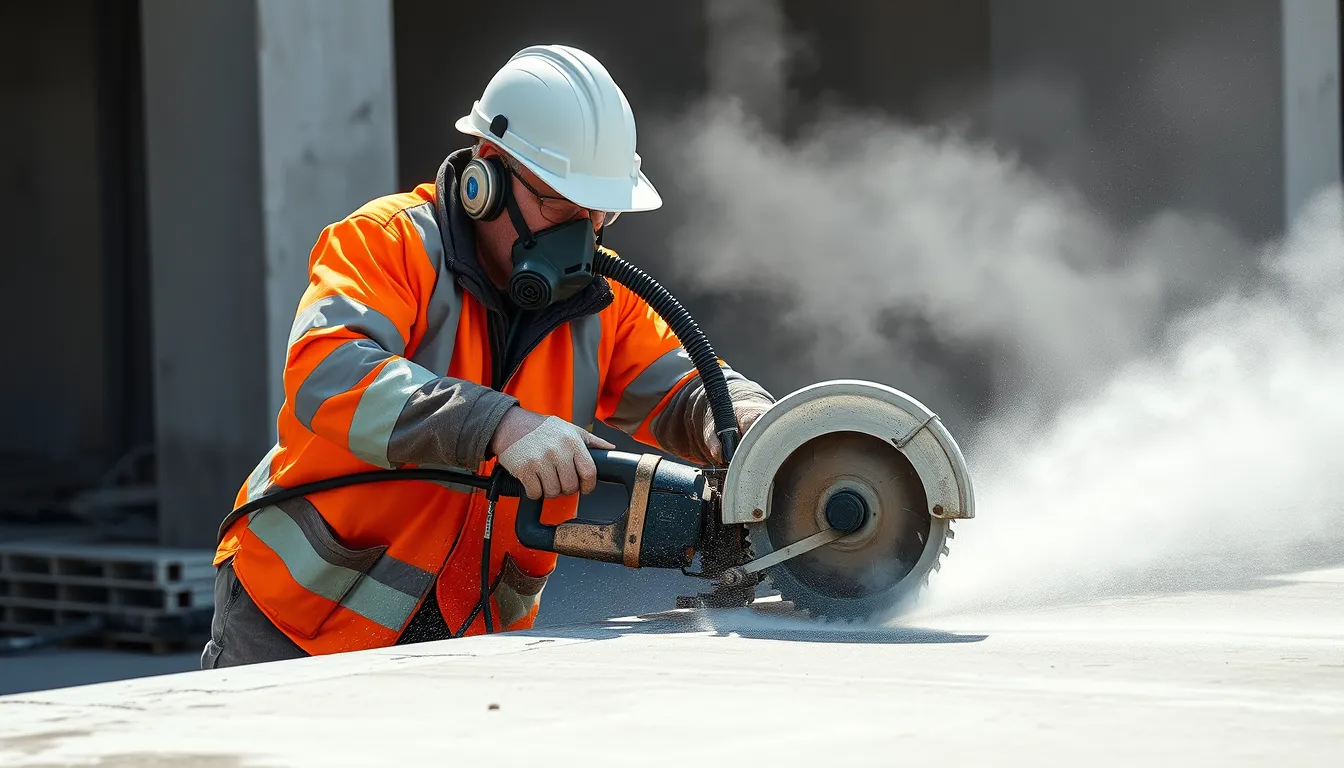
Toolbox Talk: Silica Dust
Use this talk when: cutting, grinding, drilling, or breaking concrete, masonry, stone, or tile — anything that makes fine dust from these materials.
Why this matters
Respirable crystalline silica is the fine dust released when you cut or grind concrete, brick, block, stone, and tile. The particles are far too small to see, and breathing them in over time causes silicosis — an incurable, disabling lung disease — as well as lung cancer and kidney disease. The damage is permanent and it builds up silently over years. The good news: it's almost entirely preventable with dust controls.
The hazards
- Cutting and grinding concrete, masonry, and stone — the biggest sources.
- Drilling and coring into these materials.
- Chipping, breaking, and demolition of concrete and masonry.
- Dry sweeping silica dust, which throws it back into the air.
- Abrasive blasting with silica-containing materials.
Key points to cover
- Control the dust at the source. The two proven controls are water (wet cutting and grinding to keep dust down) and vacuum dust collection (a shroud and a proper HEPA vacuum on the tool). Use one or both on every dusty task.
- Follow the exposure control plan. Many silica tasks have a specified control method that, if followed, meets the requirement. Know the method for your task and use it.
- Respirators when needed. Where controls alone aren't enough, use a proper respirator (often an N95 or better) — fit-tested and worn correctly. A respirator is a supplement to dust controls, not a replacement.
- Never dry sweep or use compressed air to clean silica dust. Use a HEPA vacuum or wet methods.
- Keep others out of the dust cloud. Silica exposure isn't only the cutter's problem — anyone downwind is breathing it. Barrier off or reposition the work.
- Housekeeping. Clean up slurry and dust properly; don't let it dry and go airborne again.
Discussion questions
- What are we cutting or grinding today that makes silica dust?
- Is our water or vacuum control set up and working before we start?
- Who else is nearby, and are they in the dust?
Log the talk
Record this talk with your daily report. BuildLog keeps toolbox talk records with your daily logs. More topics in our toolbox talk topics list.
General safety information, not a substitute for a silica exposure control plan, air monitoring, or OSHA-compliant training.
Keep your safety talks documented. Log them free with BuildLog.
Get the BuildLog app
Write the day's report, log hours and attach photos — from the site, on your phone.


BuildLog is a free construction daily report app for contractors — download the app or read the guides.