Toolbox Talk: Trenching and Excavation Safety
September 1, 2026
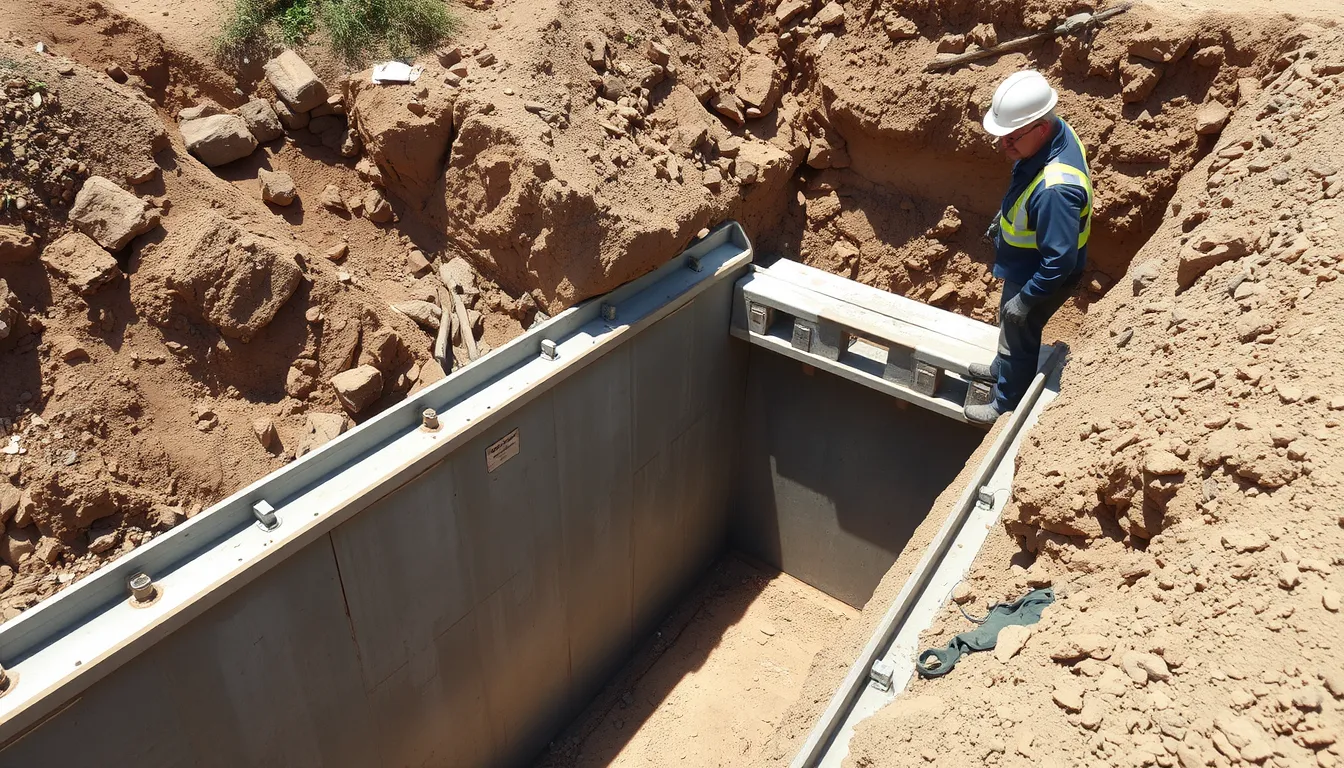
Toolbox Talk: Trenching and Excavation Safety
Use this talk when: anyone will enter or work near a trench or excavation today. Trench work is one of the deadliest jobs in construction — a cubic yard of soil weighs as much as a car, and a cave-in gives no warning.
Why this matters
Trench collapses kill workers every year, and they're almost always fatal or seriously injurious because of how fast and heavy the soil is. Someone buried to the chest can't breathe out against the pressure. The rule that saves lives is simple: no one enters an unprotected trench, ever.
The hazards
- Cave-ins — the deadliest hazard, and the reason for every rule below.
- No protective system — entering a trench without a trench box, shoring, or proper sloping.
- Spoil pile too close — excavated soil stacked at the edge, adding load and falling in.
- Falls and falling loads — into the excavation, or material dropped in.
- Hazardous atmosphere — low oxygen or toxic gas in deeper excavations.
- Underground utilities — striking gas, electric, or water lines.
- Water accumulation — undermining the walls.
Key points to cover
- Protect any trench 5 feet or deeper (and shallower ones where a competent person sees a hazard) with one of the protective systems: sloping/benching, a trench box (shield), or shoring. If it's not protected, no one goes in.
- A competent person inspects daily. Before entry, after rain, and after any change — a competent person inspects the excavation and the protective system, and can remove workers if conditions are unsafe.
- Keep the spoil pile back. Excavated soil and materials stay at least 2 feet from the edge. Better, further.
- Safe access and egress. A ladder, ramp, or steps within 25 feet of workers in trenches 4 feet or deeper.
- Locate utilities first. Call to have underground lines marked before digging, and dig carefully near them.
- Watch the atmosphere and water. Test the air in deeper excavations; never enter one with accumulating water unless it's controlled and the system is designed for it.
- Never enter to "just grab something." The most common trench deaths happen during quick, unprotected entries.
Discussion questions
- What's protecting today's trench — a box, shoring, or sloping — and is it right for the soil?
- Where's the spoil pile, and is it back far enough?
- Has a competent person inspected it today, and how do we get in and out?
Log the talk
Record this talk with your daily report. BuildLog keeps toolbox talk records with your daily logs. More topics in our toolbox talk topics list.
General safety information, not a substitute for a competent-person inspection or OSHA-compliant excavation training.
Keep your safety talks on record. Log them free with BuildLog.
Get the BuildLog app
Write the day's report, log hours and attach photos — from the site, on your phone.


BuildLog is a free construction daily report app for contractors — download the app or read the guides.